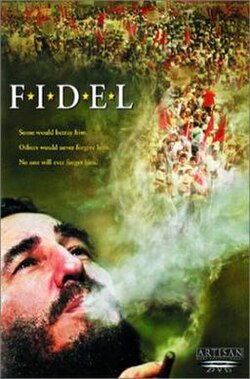
FIDEL
29/01/02
(Click here for Spanish Translation)
‘FIDEL’
“The rise and fall of Castroism, through such rose-colored glasses” by Dr. R. L. Chacona
Thankfully, Showtime’s 4 hour epic miniseries was reasonably shorter than most of Fidel’s speeches. In this new presentation the Castro fable myth survives, even thrives, this time through calculated misrepresentation, blatant omission and, as always, malevolent contrivance. The myth of Fidel Castro as the “sincere revolutionary spirit of the 20th Century” is alive and flourishing.
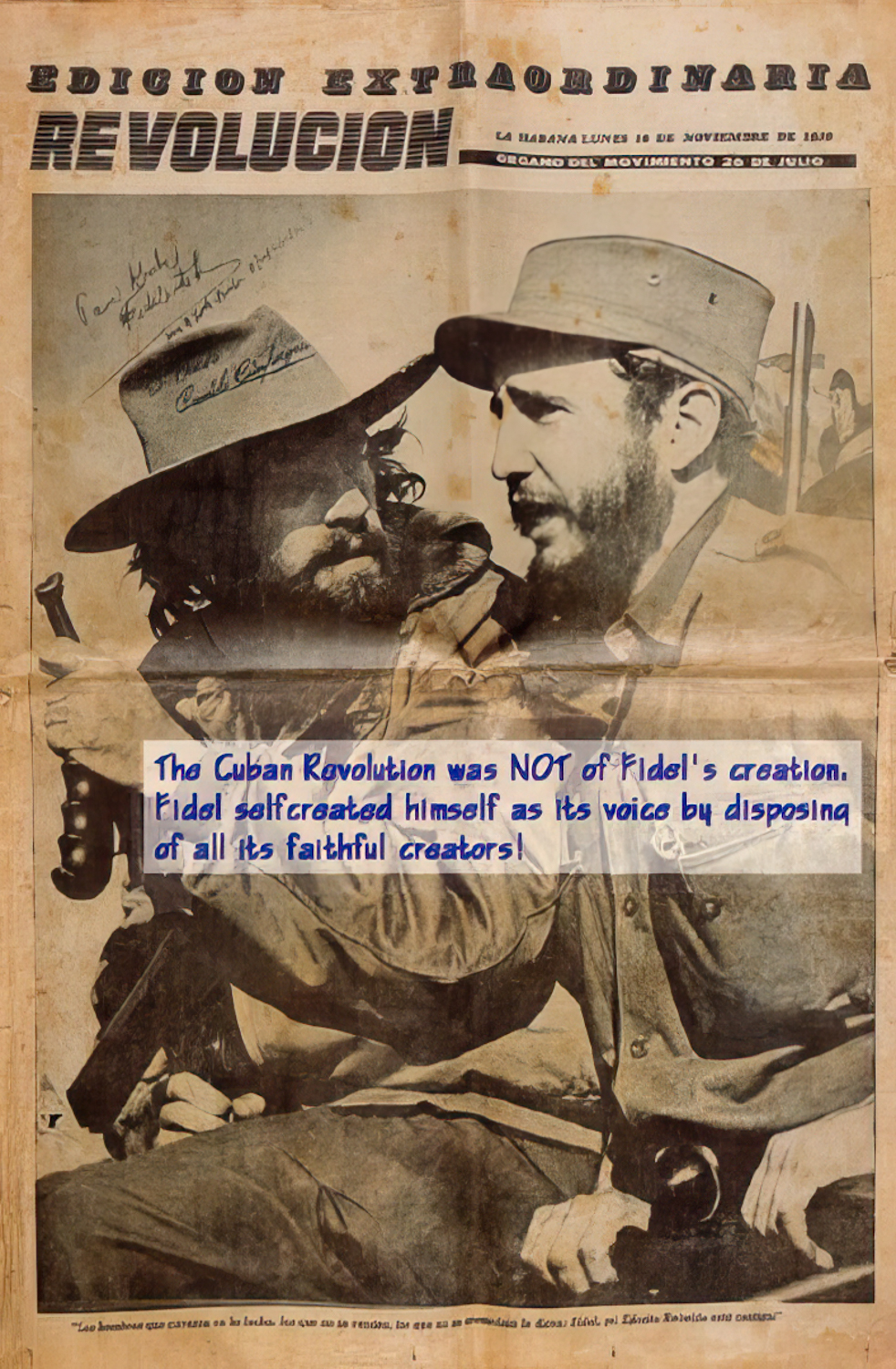
Promising accuracy and objectivity, the director, David Atwood, boasts his film as “morally ambivalent.” Despite few scattered moments of lucidity, Mr. Atwood misses his mark much in same way the revolutionary ideals attributed to the film’s main character are never realized. One may certainly ignore the extended and needless arguments about Fidel’s early innocence, his original intentions, the exact instant that he turned into a Marxist-Leninist, or the culpability, through out it all, of the United States. A careful study of history however, will reveal that the Cuban Revolution, in spite of the film, or any staunch insistence to the contrary, was not Fidel Castro’s creation. At best, he was its public relations, its self-fabricated, self-appointed voice and, from the very beginning, he has only remained thus by ruthlessly silencing any and all other voices within earshot.
One might wish to debate add-infinitum on how the Cuban people have faired under Fidel’s totalitarian system, but that argument has mostly been laid to rest, except possibly among his most sightless enthusiasts or a few shameless commissars. The filmmaker’s timeworn, simplistic justifications that absolute power corrupts absolutely and that uncompromising and brutal “discipline” and “sacrifice” are necessary to create any lasting change, leaves us little promise. A people’s revolution gives birth to freedom, Castro’s revolution buried it. Fidel, the film, callously minimizes the extent of Fidel’s murderous “revolutionary justice”. Filmmakers, as modern day historians, should avoid tendencies towards ebullient superficiality.
Fidel’s favorite philosopher, Heraclitus, wrote: “One can never step twice into the same stream.” Nevertheless, those who do not faithfully study history will often repeat its mistakes. Fidel, the film, barely skims over most of the revolution’s important historical lessons that are as valid for us today as ever before. A fair judicial process, Writ of Habeas Corpus and constitutional rights of individuals do not predate ‘trial by jury’ or the Magna Carta, yet they are no less revered. These time-honored concepts are at the heart of social stability in western civilization. They serve to separate human beings and their governments from the law of the jungle and the gun. Against all his original promises and pronouncements, in the interest of society’s “greater-good” and, to protect Cuba’s internal and external “national security”, etc., Castro abolished these essential judicial institutions. Cuba’s venerated Constitution of 1940 has been suspended throughout Castro’s reign. The ends do not justify the means and as in Cuba’s case, the means often become the tragic ends.
Regrettably, all these events have allowed Fidel, the man, to enjoy his totalitarian reign over the Cuban people for over 43 years. It is no wonder, as the film’s climax so vigorously states, that Fidel remains so completely unrepentant. Mr. Atwood failed to delve into facets of that revolution that could furnish modern-day insights. The movie provided neither personal nor societal inspiration.
Fidel has frequently claimed defiantly, “History will absolve me.” Mr. Atwood has candy-coated history, but truth is tenacious; history and the truth have a habit of one day catching up with great criminals.
Copyright: Pearl Films: New York, New York [01/29/02]
Published on the ww-web by C.A.N.F.
Spanish also in print: EcoLatino (NYC)
MAS: